Save Kilmainham Mill Campaign Group

ABOUT

Save Kilmainham Mill Campaign Group

In 2000 operations ceased at Kilmainham Mill. Michael Conaghan and the Kilmainham Inchicore Heritage Group persuaded Dublin City Council (DCC) to commission a Conservation Plan in the hope that they might buy the Mill. The Mill owner unsuccessfully attempted to develop the site and Kilmainham Mill was stuck in National Asset Management Agency (NAMA) following the recession and the building fabric continued to deteriorate.

The local community realised the importance of this historic site and its potential to be a focus of local social, industrial, environmental and cultural heritage as the last surviving mill in Dublin city. In 2016 local activist Michael O'Flanagan set up the Save Kilmainham Mill Campaign Group (SKMCG) comprising a dedicated group of locals who wanted to encourage Dublin City Council to purchase, preserve and restore the Mill for use as a public amenity. The Group set up an outreach programme visiting local schools to talk about the Mill's history and its significance to the area.

Drone footage, Kilmainham 2017
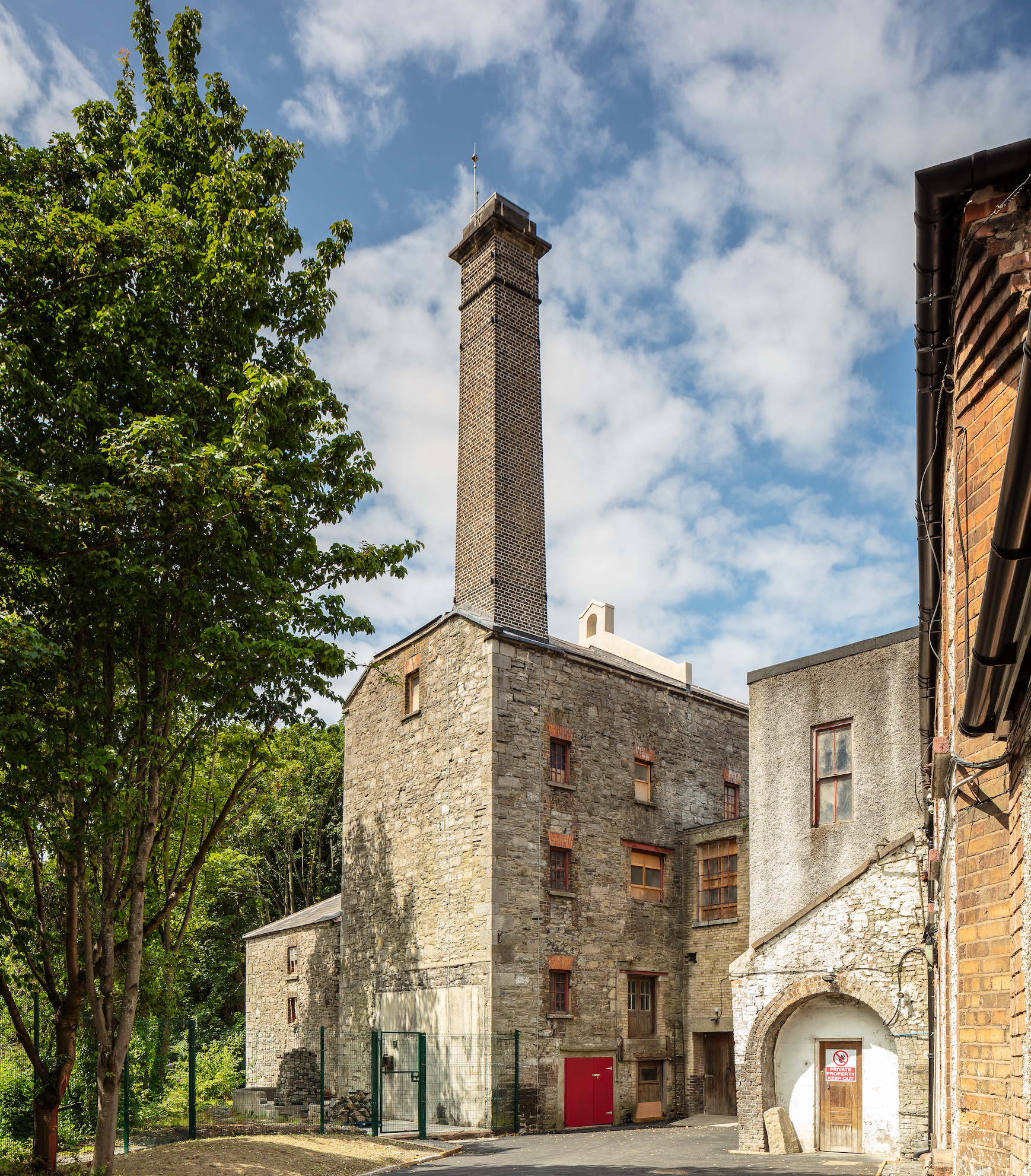
Kilmainham Mill after Stabilisation and Repairs Works 2023

Kilmainham Mill after Stabilisation and Repairs Works 2023

Following a successful campaign and considerable lobbying and although vacant for more than 20 years, DCC purchased the Mill in December 2018.

Stabilisation and Emergency Repair Works were delayed by more than 2 years due to the pandemic, but were completed in July 2023.

In autumn 2023, the SKMCG organised a series of talks to celebrate the completion of the stabilisation works and to inform and engage the local community in history, the environs of the Mill and opportunities for its future.

The following year DCC commissioned an updated Conservation Management Plan and a Vision Masterplan to develop core principles for a sustainable use for the Mill. There was extensive consultation with the local community and other stakeholders. The Vision Masterplan was to inform the brief to the overall restoration of Kilmainham Mill. The publication of this Vision Masterplan is currently overdue.

Save Kilmainham Mill Campaign Group Objectives:

  • The Save Kilmainham Mill Campaign Group will continue to engage with Dublin City Council to ensure that the unique cultural, social and heritage attributes of Kilmainham Mill are upheld on behalf of the local community.
  • The Save Kilmainham Mill Campaign Group will promote public access and community and educational uses in the Mill, that reflect its cultural heritage.
  • The Save Kilmainham Mill Campaign Group will strive to ensure that the Mill and its environs are restored using best practice conservation, sustainability and biodiversity standards and that any contemporary interventions are high quality architecture.
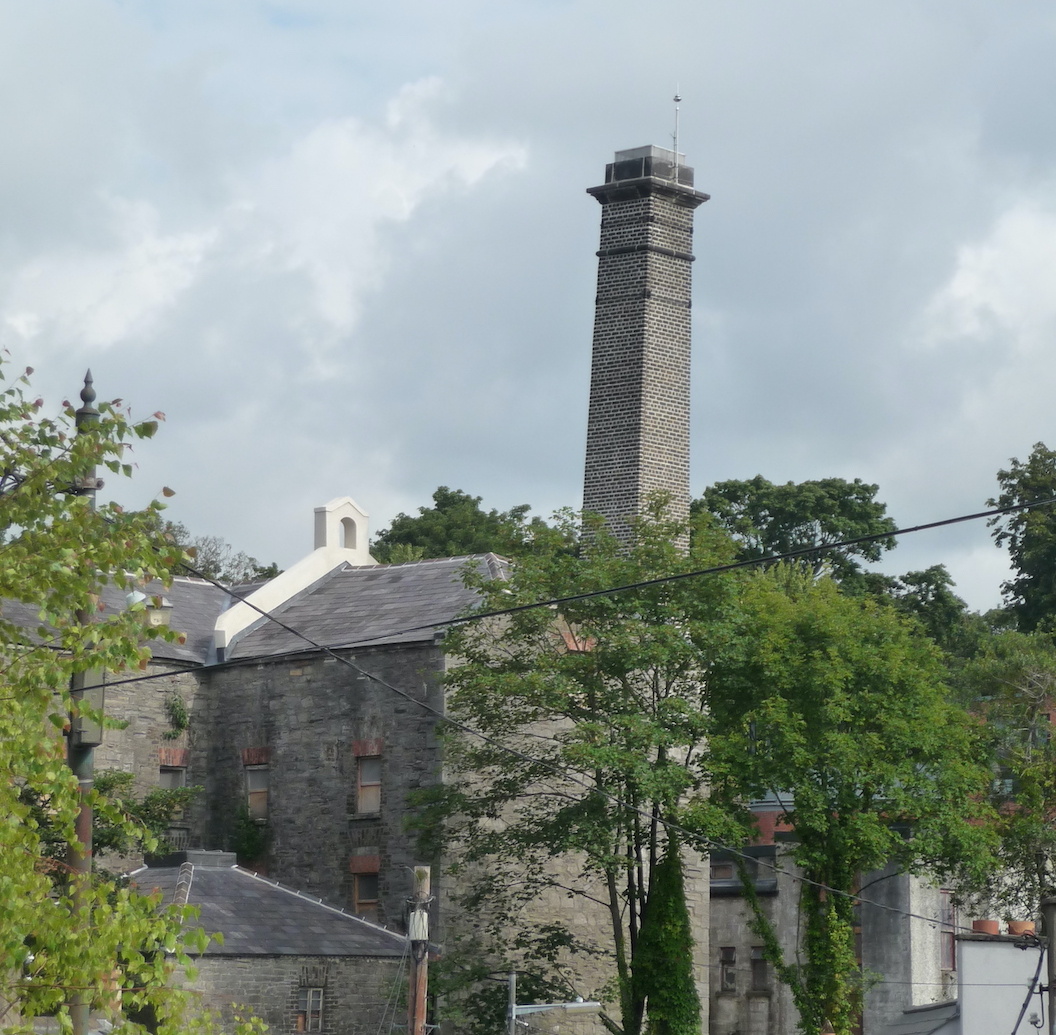
Restored Chimney and Belfry, Kilmainham Mill 2023
Restored Chimney and Belfry, Kilmainham Mill 2023
RESOURCES

HISTORY

A Summary of the History of Kilmainham Mill

An Anglo Norman village developed in the River Camac valley, on the south side of the Sighe Mhór – the ancient route from Dublin City to the West, when Strongbow established the Knights Hospitallers of St John of Jerusalem in the Priory of Kilmainham in 1174. Water-powered mills supplied flour and other goods to Kilmainham Castle, the seat of English rule until 1575, when the Court moved to Dublin Castle. A mill pond on the site of Grattan Park, Inchicore, supplied a mill race (which flowed behind Kilmainham Gaol) with the water to power the Mill. The four-storey former flour mill was built in about 1820 and in 1867 William Brophy installed a 30 horsepower steam engine and chimney.

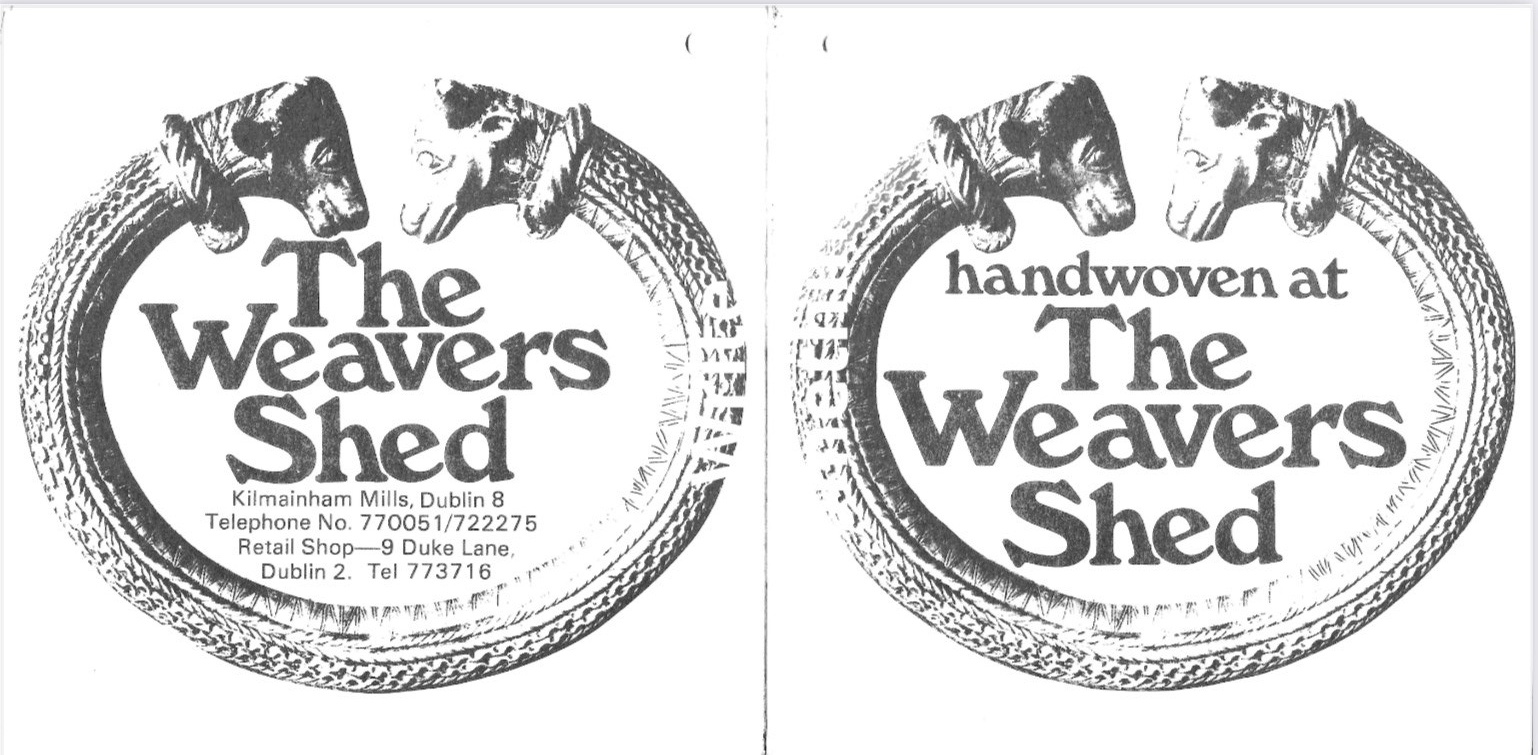
The Weavers Shed logos

Image courtesy of John O'Loughlin Kennedy

During the 20th century Kilmainham Mill was a textile mill. In 1903 it was purchased by C.H. Bates and Company of Yorkshire. In 1973, Noírín Kennedy Pye, a long established handweaver at the Weavers Shed in Duke Lane, Dublin, bought the Mill with her brother, John O'Loughlin Kennedy. For 10 years, the Mill operated a vertical production – all processes from raw wool to finished fabric. From 1984 to 2000 Damian Shine of Charona Ltd increasingly concentrated on the finishing process for others in the weaving industry, including upholstery for international airlines. The Mill has played a significant role in the local economy and community.

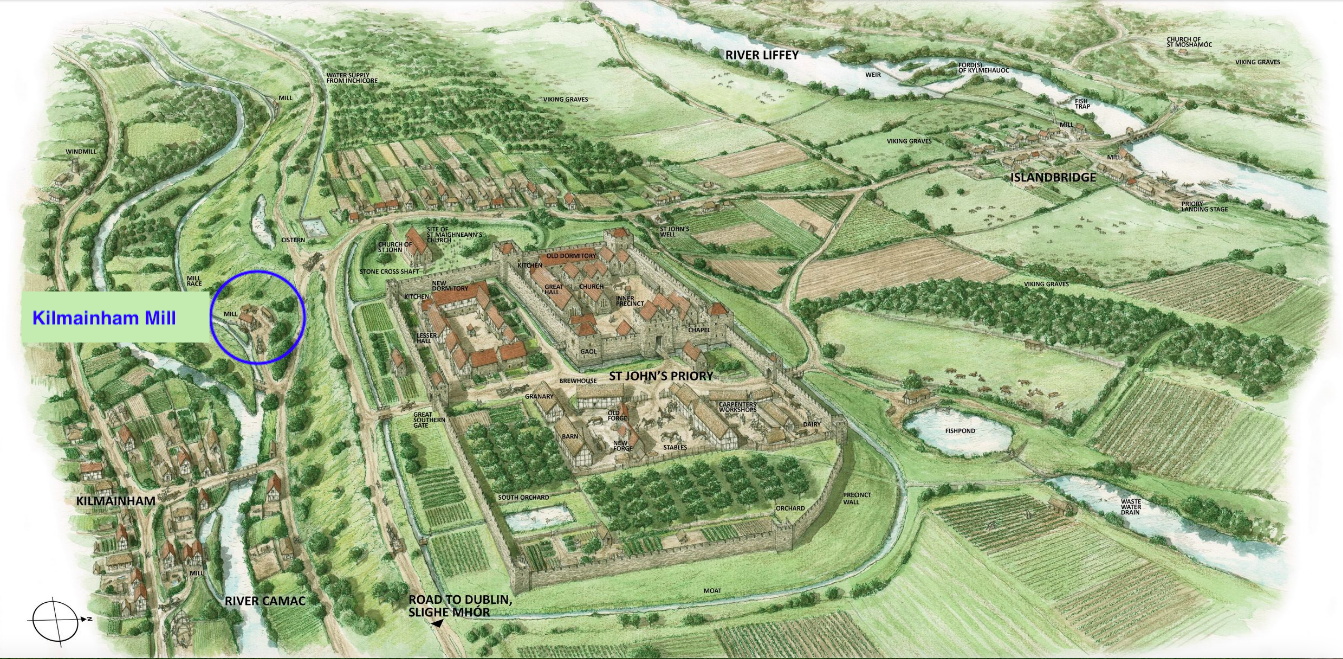
Illustration showing the reconstruction of St John's Priory in c.1340

Illustration showing the reconstruction of St John's Priory in c.1340 by Stephen Conlin

Mill Worker's Story

A glimpse into life at the Mill by Frank Nolan, who worked at the Weavers Shed from 1974-1990:

I started as a cloth finisher and then I progressed to the tentering machine. At the start of the day customers from Avoca, John Hanley and Botany Weavers would deliver bales of cloth for processing. Depending on the finish required, processes varied from fire proofing to a tailored finish, or brushing if they were designed to be blankets or rugs.

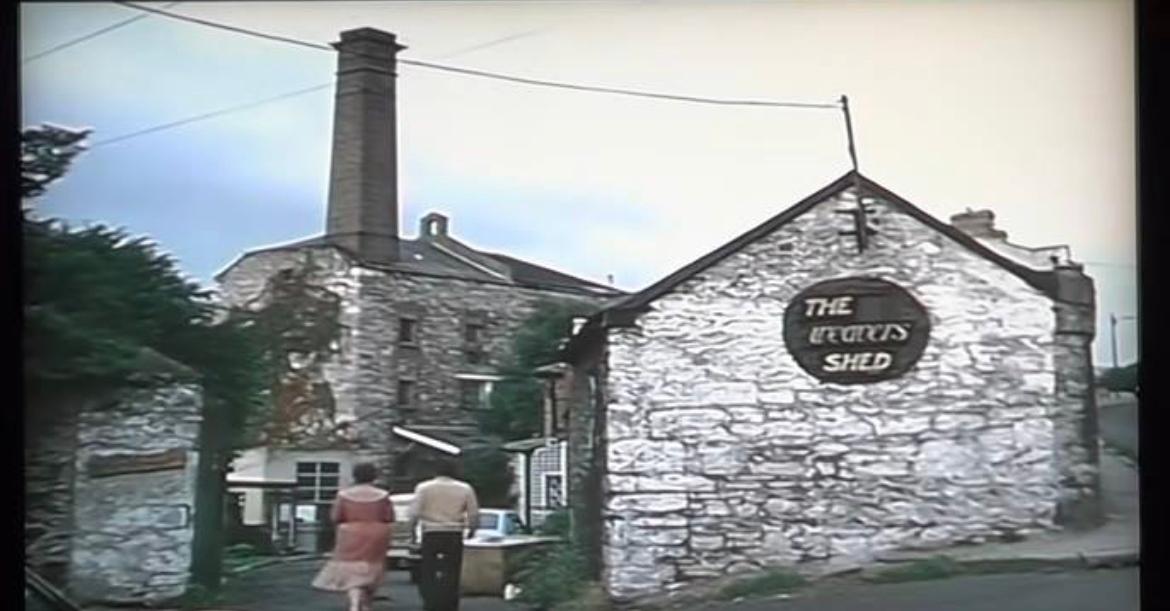
The Weavers Shed exterior

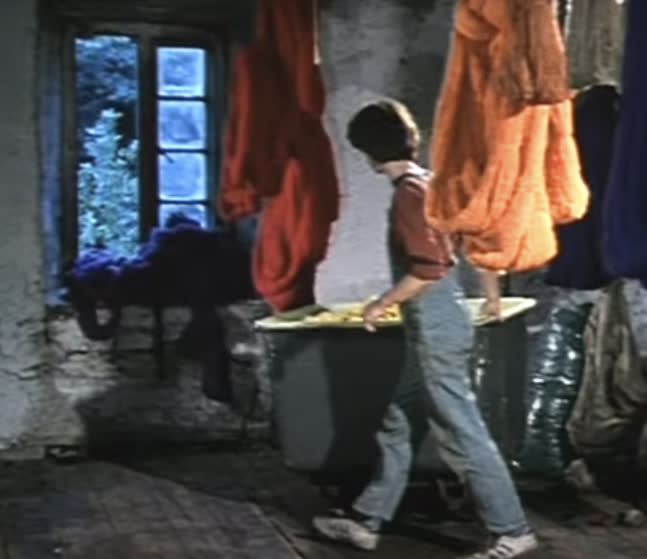
"Hands" A Dublin Woolen Mill documentary

Worker in documentary

"Hands" A Dublin Woolen Mill documentary

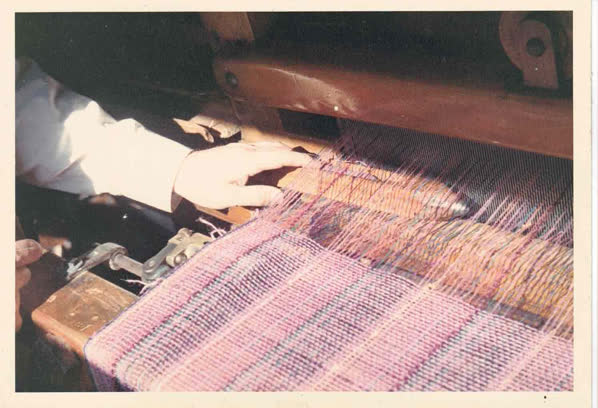
Hands weaving

Photo courtesy of Noirin Pye

As the years went by we started to make our own yarn. The raw wool would be washed, dyed and put into the carding machine, which would turn the wool into spools of yarn. The spools were transferred onto a spinning machine to spin the yarn to the desired thickness, ready for weaving.

The woven fabric was cut to size for rugs and blankets for sale. During the summer, coach-loads of people would arrive to tour the Mill and would often visit the shop to buy the finished goods, such as shawls, scarves, rugs, jackets and coats. It was a very interesting place to work.

CONTACT

Get in Touch:

savekilmainhammill@gmail.com

Getting to Kilmainham Mill

Rowserstown Lane, Kilmainham, Dublin 8

Buses:

From City Centre G1, G2, 13 to Old Kilmainham Stop no 1944

To City Centre G1, G2, 13 from Old Kilmainham Stop no 1993

From City Centre, Heuston Stn 60 to Inchicore Rd at Gaol Stop no 2640

To City Centre, Heuston Stn 60 from Con Colbert Way Stop no 2722

Luas: Red Line to Suir Road [10-15 minute walk to Mill]

Parking: Limited on-street parking - mainly metered - in vicinity of Mill